.svg)
.svg)
An adrenaline sport more popular than ever, paragliding carries, in the collective mind, this notion of a risky extreme sport with all the associated risks and fears, when it's actually quite different. Just daring to try a first paragliding flight is enough to realize that, in the end, this activity is among the most accessible and appealing. Still hesitant? Then at Les Grands Espaces, we'll tell you everything about the sensations you might imagine having during a flight above the lake, so you feel reassured before this unforgettable experience.
Why doesn't dizziness or vertigo happen in paragliding and hang gliding?
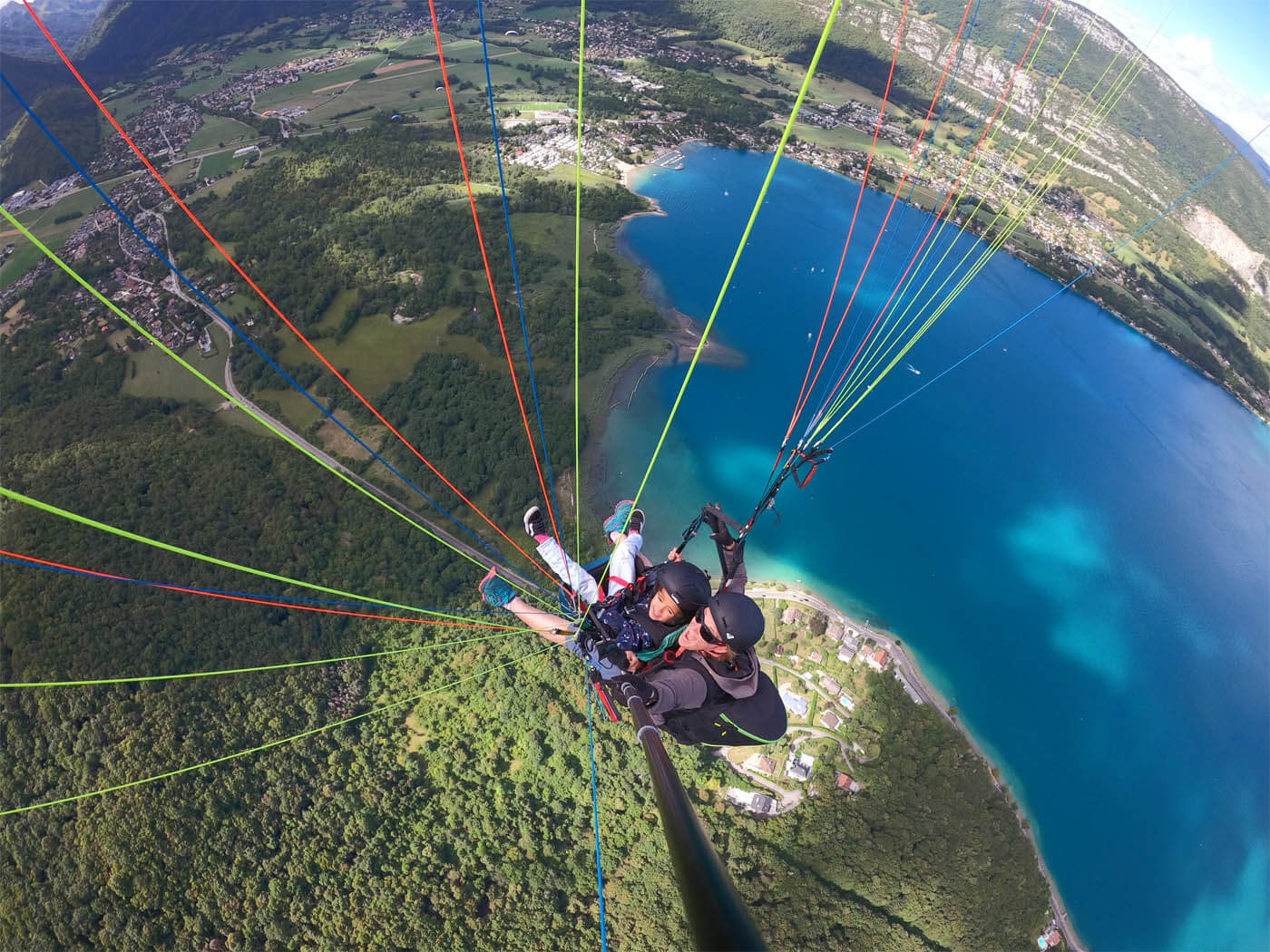
The sensation of vertigo is actually a problem linked to the inner ear and the visual field. You need to have your feet on the ground, or on something connected to the ground like a chair, and look down, to get dizzy and lose your balance. The good news is that when you do a paragliding flight above Lake Annecy, your feet are dangling in mid air! So it's not possible to get vertigo while paragliding. The same goes for a hang gliding flight, even though you're lying down beneath the wing.
Fear of heights: a natural sensation you get used to.
Fear of heights is that sensation that either repels or attracts you when you get close to a precipice. This sensation is present, in small doses, in a large part of the population. It's a natural reflex of the brain in the face of the unknown of empty space, and the risk of falling, mentally projected and imagined by our brain, especially in adults.It's actually a well known sensation early on for all rope access technicians and other professionals working at height, as well as climbers and mountaineers. But don't worry, it's entirely possible to make this fear of heights disappear fairly easily. You just need to desensitize yourself by spending time close to exposure.After a few hours or a few days in a dizzying airborne environment, the fear of heights fades and you regain all your abilities and ease of movement in this new environment.In paragliding, this apprehension about the void only lasts a few moments, because once takeoff is over and you're comfortably settled in the harness, the sensation of emptiness disappears and gives way to excitement and taking in the magnificent scenery. The cool air on your face also helps you quickly regain your composure and shake off that little adrenaline rush you feel during your first tandem flight.
Acrophobia: a real panic fear you need to learn to tame
Acrophobia is an intense, irrational, and heightened fear of heights and open space, resulting in dizziness, shaking, a racing heart, nausea, and a loss of judgment and clear thinking. Psychological in nature, acrophobia is thought to affect around 3 to 5% of the population. Very intense, this extreme fear of heights can be worked on with a doctor through desensitization. To avoid any incident in real conditions, new virtual reality based methods make it possible to overcome it in a clinical setting without putting yourself at risk.

How do you avoid being scared during a paragliding flight?
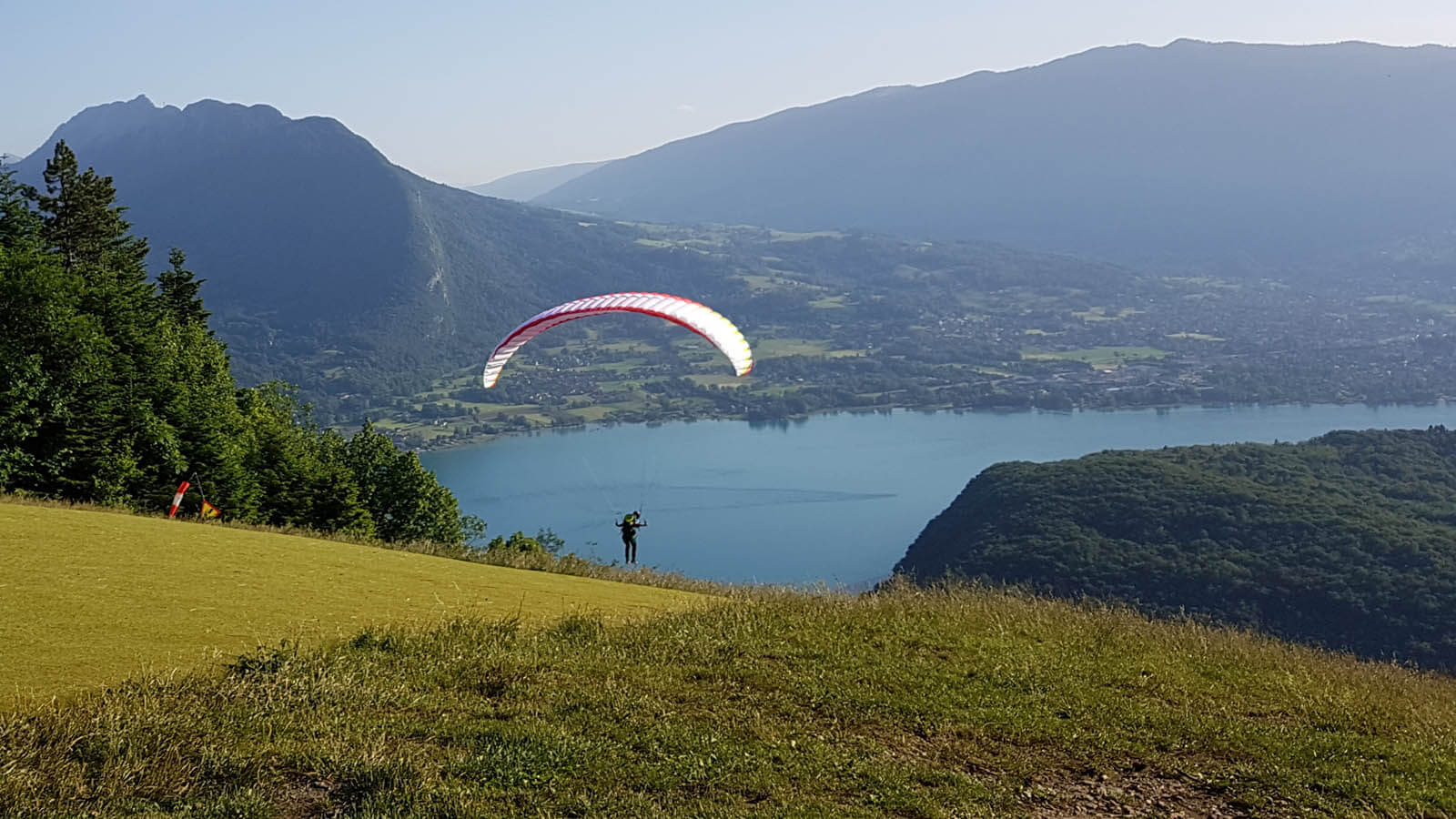
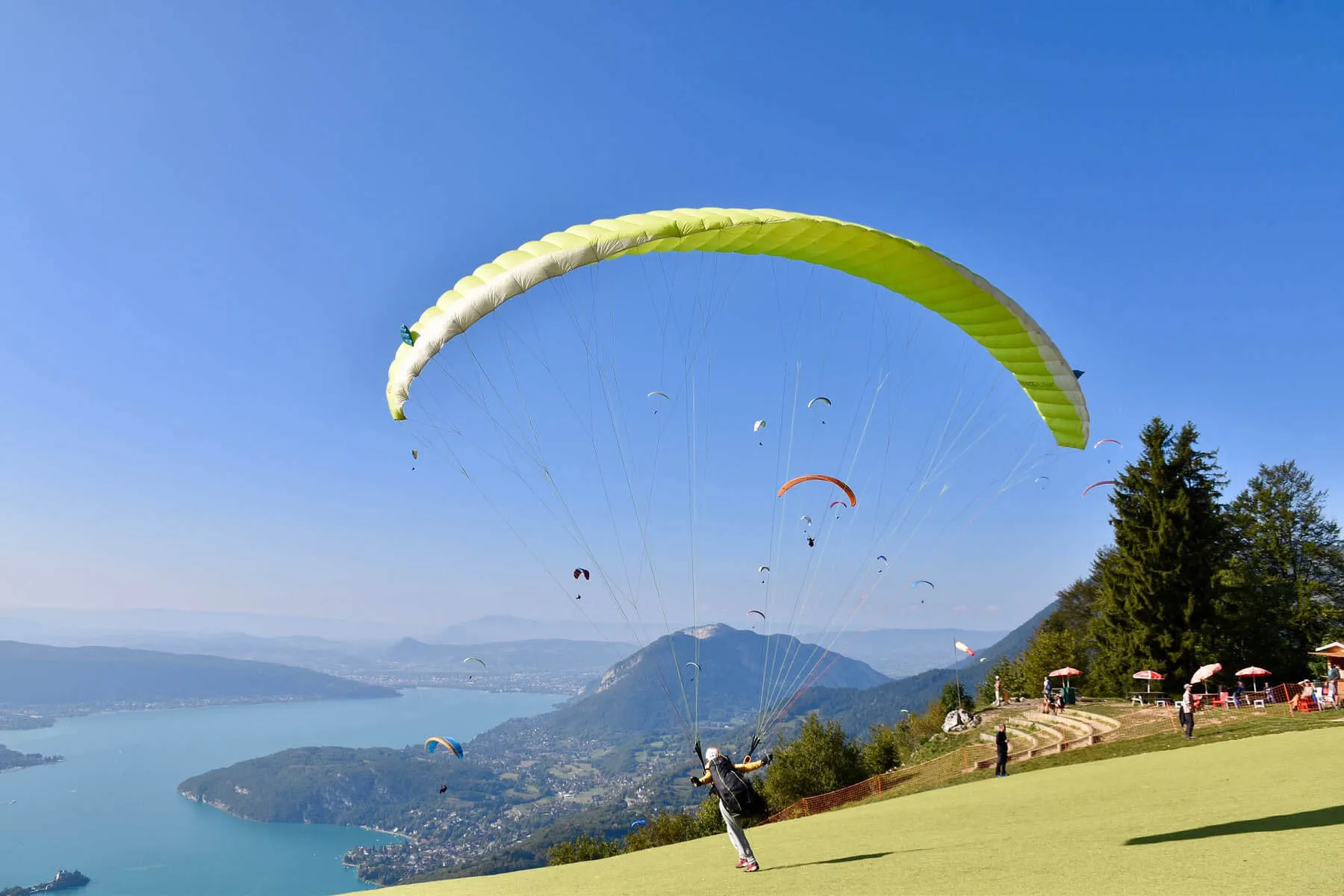
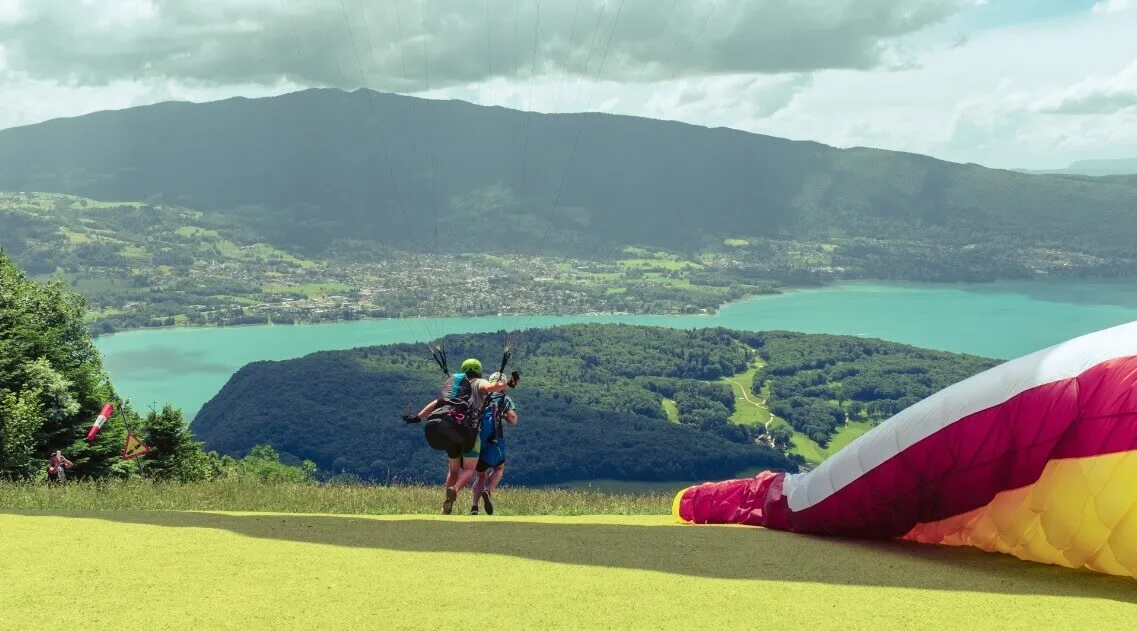
Takeoff is generally the most stressful moment of the flight. But you'll see that, unlike a skydive or a bungee jump, a tandem paragliding takeoff goes upward, not downward. The wing will inflate above your head and you'll feel yourself gently pulled upward until your feet no longer touch the ground. Once airborne, your pilot will have you sit in your harness, you'll settle into a more natural position, like in a hammock, and the cool air will help ease the tension.One trick to avoid being scared at takeoff is simply to look far ahead, toward the heading your instructor told you to run toward.After a few steps you'll already be airborne, and all that's left to do is enjoy the flight!
What sensations does paragliding give you?
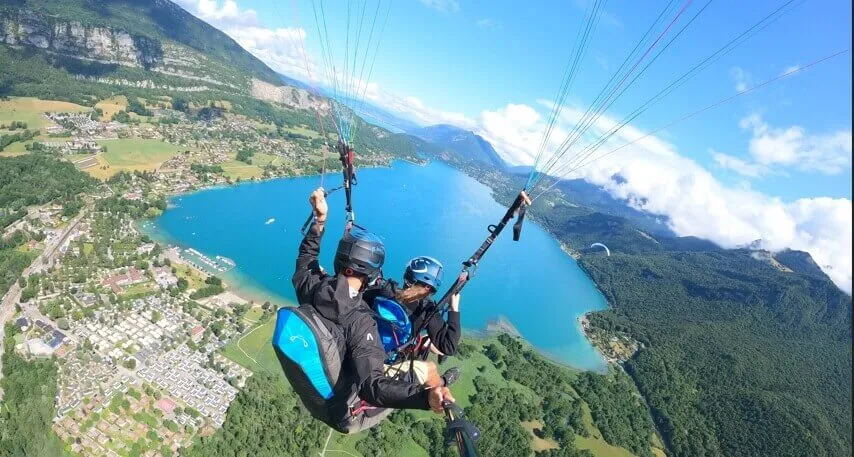
A paragliding flight breaks down into 3 phases: takeoff, flight, and landing.Each flight offers its own particular sensations.Takeoff: You're stressed the first time, but you ultimately discover a sensation of being pulled upward that gently lifts you off the ground, with the wind cooling your face.The flight: once settled into the passenger harness, you're a bit like in a hammock up in the sky. The paraglider can pitch back and forth depending on thermal conditions, with a sensation fairly similar to a swing. Turns happen smoothly, and at times you might feel the paraglider pulling you upward. That happens when you enter a thermal.Landing: as you get closer to the ground, you feel a mix of relief at returning to solid ground and a bit of apprehension about the impact. You'll then see the pilot perform a flare maneuver just before touching down. This maneuver suddenly reduces your speed so the landing happens gently. And if you're lucky enough to have a light lake breeze, you might even land standing completely still, without having to take a single step forward!