.svg)
.svg)
How much does a paragliding setup generally weigh?
A paragliding setup is made up of a wing that inflates with the relative wind, a harness the pilot sits in, and a reserve parachute in case of a flight incident.
- The weight of a modern beginner paraglider wing like the Advance Alpha 7 ranges from 4.2 kg to 5.7 kg depending on the size chosen (lines and risers included).
- The weight of a typical paragliding harness like the Advance Axess 5 ranges from 4 kg to 4.4 kg.
- As for the weight of a reserve parachute, it can range from 1 kg to 2 kg depending on the model and size chosen.
In the end, adding all of this up for an average sized pilot, you get an average paragliding setup weight of around 12 kg. This is of course just a rough example.

A weight that varies depending on the wing model and pilot size
The weight of a paraglider wing depends on the fabric used, and on the wing's surface area:Older fabrics, still used until a few years ago, were much heavier than today's fabrics, which use new coating treatments. The difference is really striking when going from an old school wing to a brand new modern one.The other factor that directly affects the wing's weight is of course its surface area. The bigger the wing, the more fabric it requires, and the heavier it is. The choice of wing size, meanwhile, isn't left to chance but is directly tied to the pilot's weight, or more generally to the AUW: an acceptable weight range the paraglider can handle while staying within its certification.Beyond the weight of the wing itself, a paraglider's weight also depends on the harness used as well as the reserve parachute used. Just like with wings, the latest generation of harnesses are much lighter than older models. Harness weight also depends on the pilot's height and build. A pilot who is 1.90m tall and weighs 90 kg will need a bigger harness than a small, lightweight pilot.As for the reserve parachute, the difference lies between standard models and light models. The former are more affordable, while the latter require a bigger investment to save a few hundred grams.
Mountain wings lighter than ever
In recent years, paraglider wing manufacturers have focused heavily on lightweight mountain wings. By using thinner fabric and sometimes a single-skin construction, they've managed to offer wings weighing close to 1 kg! A real revolution for pilots who aren't looking to fly cross country but simply to glide down a mountain calmly when weather conditions allow.
How much does a tandem paraglider weigh?
Tandem wings used for paragliding flights are much bigger, since they need to support the weight of two passengers. The weight of a tandem paraglider wing will therefore be much heavier than a solo wing.As an example, the weight of the Sky Paragliders Apollo Bi tandem wing ranges from 7.15 kg to 7.6 kg.On top of that comes the weight of both harnesses, pilot and passenger, not to mention the reserve parachute, also sized for two.In the end, you should plan for a tandem paraglider setup weight of around 17-18 kg!
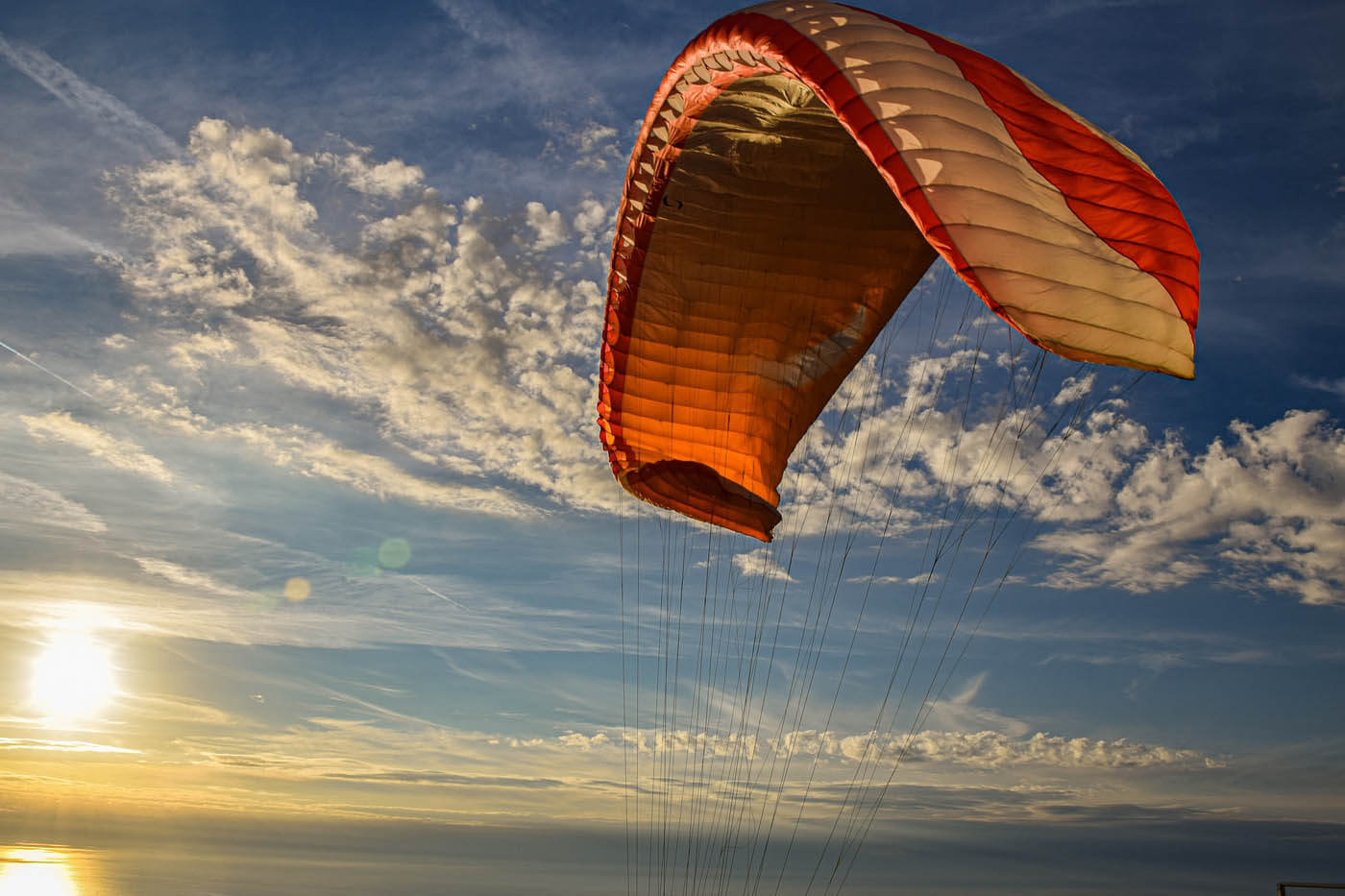
Don't confuse paraglider weight and AUW
When talking about the weight of a paraglider, people generally think either of the weight of the wing itself, i.e. the fabric and lines, or the weight of the equipment as a whole, including the wing, harness, and reserve parachute.AUW (All-Up Weight), meanwhile, represents the total flying weight the paraglider needs to support. This corresponds to the weight of the paragliding setup (wing + harness + reserve parachute) plus the weight of the pilot and all their equipment (clothes, helmet, radio, sunglasses, water bottle...)The two concepts are therefore very different:
- The first (paraglider weight) tells you how much you'll need to carry on your back, especially for hike and fly enthusiasts. It's the weight of the complete pack.
- The second (AUW) is simply crucial for buying equipment suited to the pilot, in order to stay within a weight range guaranteed by the manufacturer. A paraglider that's too loaded or too light will react abnormally to control inputs and aerological conditions, and could be dangerous. More info on calculating AUW here >