.svg)
.svg)
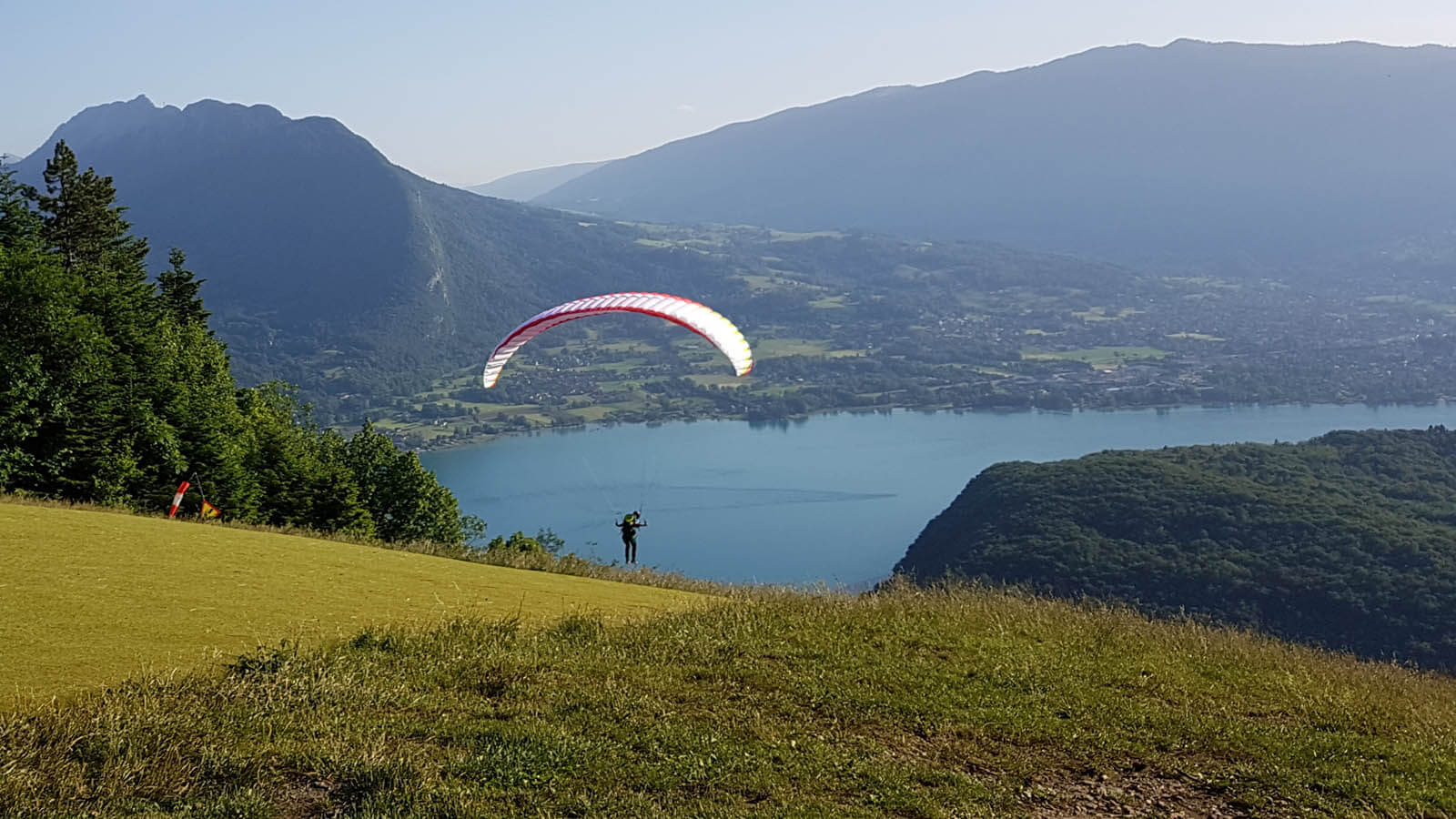
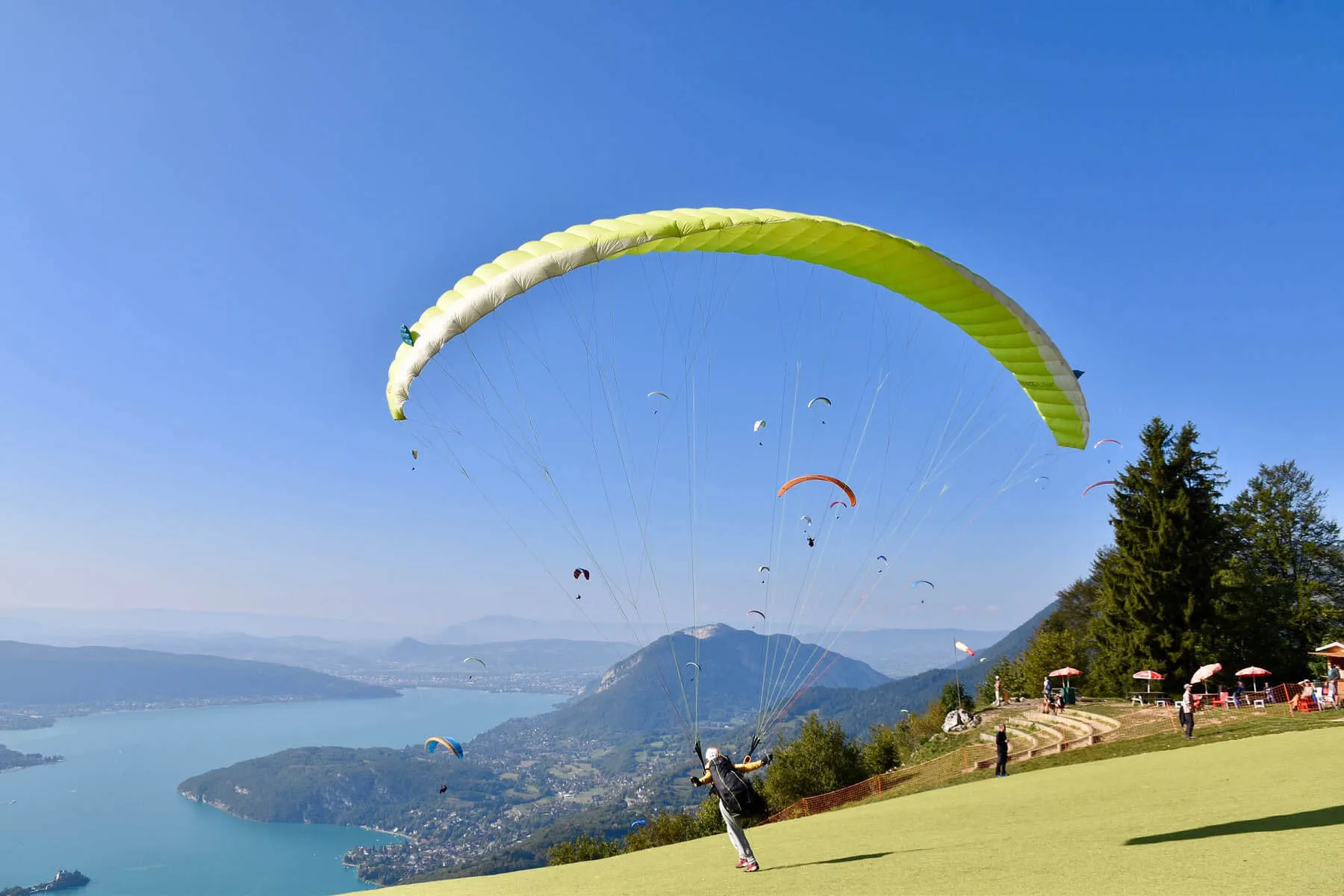
The paragliding takeoff phase is a crucial stage of the flight. It requires analysis, concentration, and a certain technique to inflate the wing while following a precise, controlled heading.
How do you take off in paragliding?
For a paraglider to fly, the wing needs to be inflated and reach a minimum speed to generate enough lift. To do this, the pilot must carefully prepare their wing on the ground to avoid any line twists or knots in the lines that could cause problems during inflation. Once the pre-flight prep is done, the pilot can move on to the actual inflation stage, meaning using the wind to let air into the wing's cells, which are open at the front and closed at the back, thereby giving the wing its aerodynamic shape. There are two scenarios for this: either there's a bit of wind or breeze on the launch and the wing inflates effortlessly, or it's dead calm and you need to run to create a relative wind, a bit like with a kite. The first technique is called forward inflation and the second reverse inflation.
Reverse launch: the basic method taught to beginners
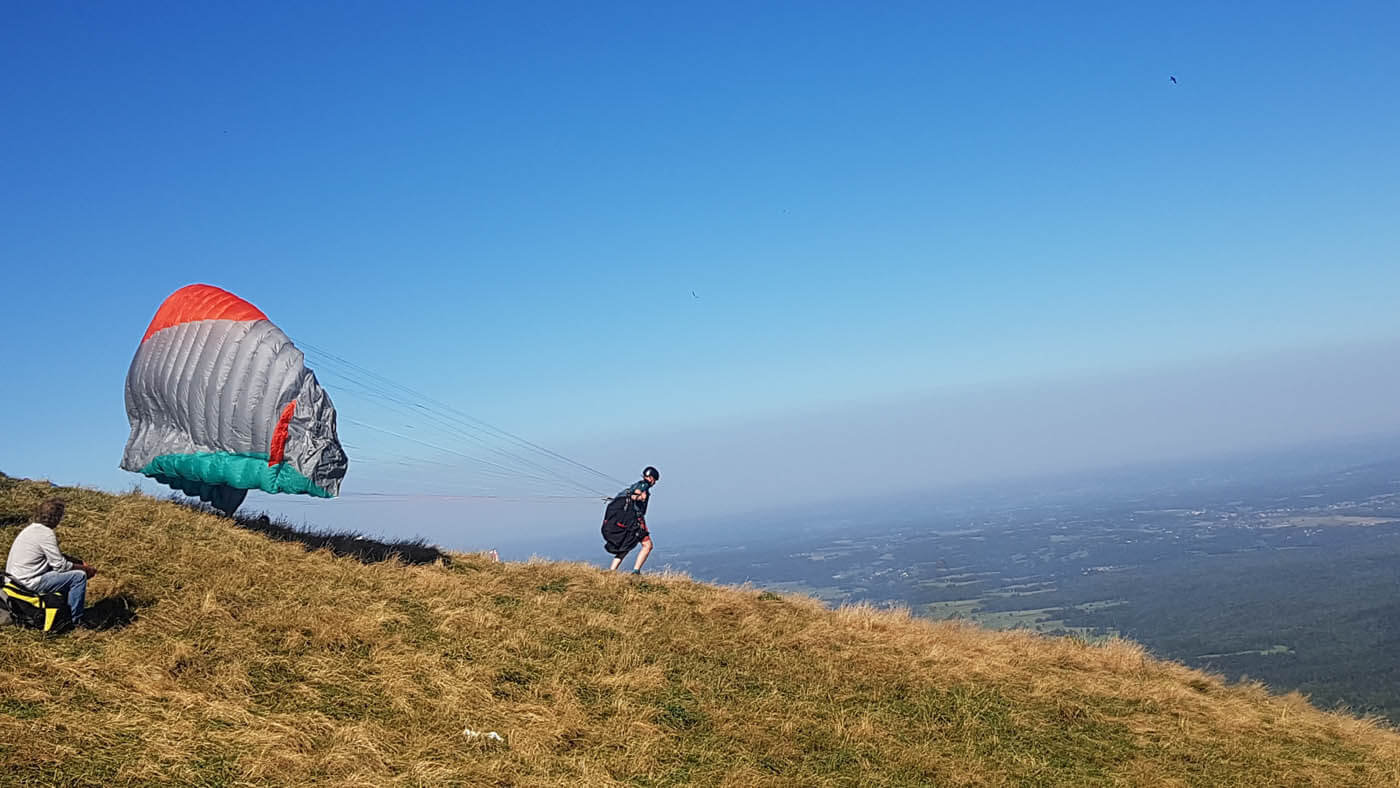
The reverse launch technique is the first inflation technique taught at a paragliding school in Annecy. Beginner students fly in the calmest possible air to avoid any turbulence. Under these conditions, takeoffs often happen with no wind at all, early in the morning. Students then learn, during their initiation course, to run at the right speed, favoring the front risers to power up the wing's leading edge and let air into the cells. As the name suggests, during a reverse launch, you run with the wing behind your back. You can't see it, so everything is done by feel. During the run up, you need to both bring the wing up behind you and stabilize it overhead to avoid a frontal collapse, while keeping it well centered so it doesn't drift right or left. This control is done with the brakes and by positioning and recentering the pilot beneath the wing.
The forward launch technique for stronger wind conditions
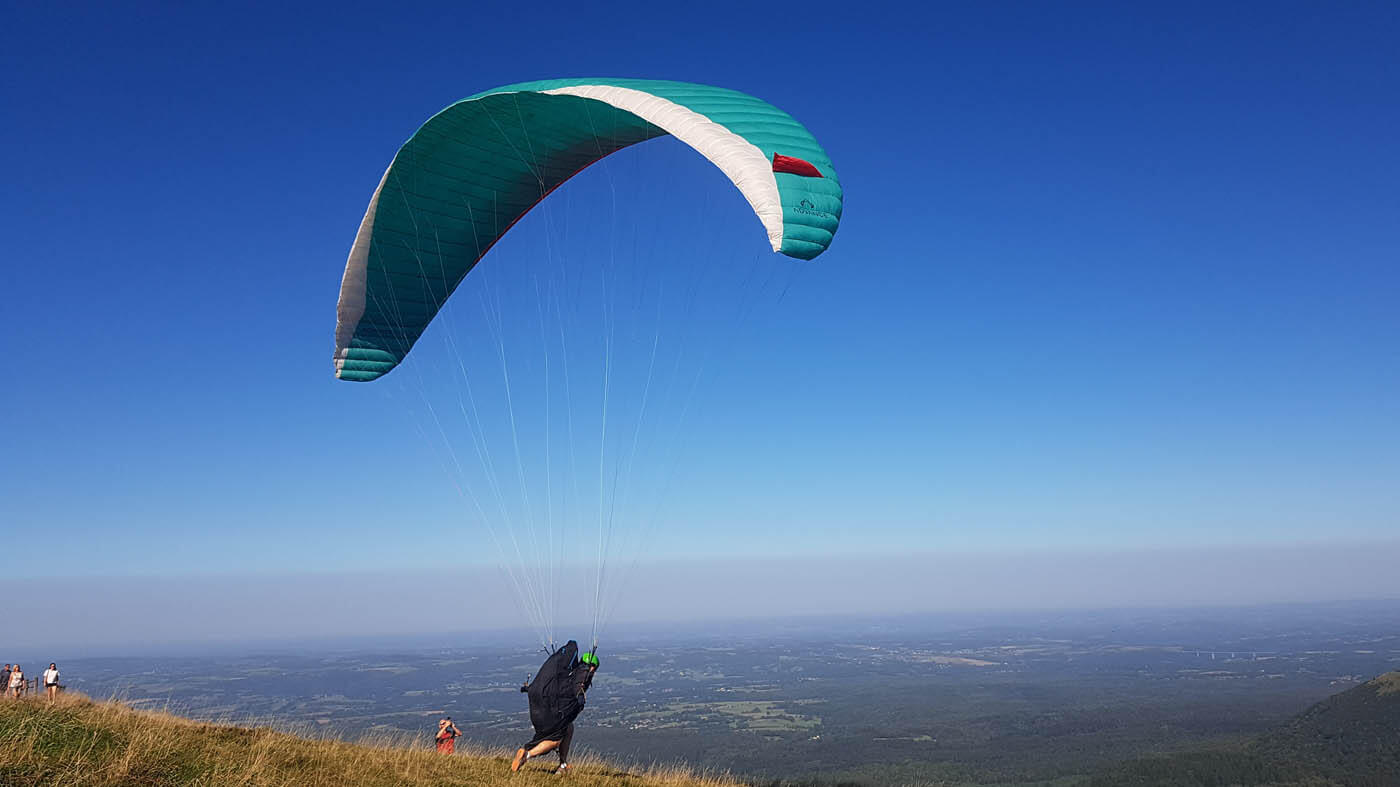
When the wind or breeze is blowing on the launch, there's no need to do a reverse launch. The pilot can instead do a forward launch. To do this, they lay out their wing facing the wind and do a half twist with the lines to end up with their back to the wind, facing the wing. They just need to apply tension to the front lines to raise the leading edge. The cells will then fill with air on their own, and the wing will unfold and inflate gradually and automatically. The pilot can then take their time to check the whole line fan. All that's left is to give the wing a bit of momentum by adding resistance on the risers, taking one or two steps backward so the wing takes off and starts picking up speed. The wing then needs to be stopped overhead to avoid letting it overshoot. A forward paragliding launch ends with the pilot turning around the right way to undo the half twist, followed by a short run of a few steps.[gallery size="large" columns="2" ids="12152,12153"]
The Cobra technique
When the wind is really strong (over 20/25 km/h), a forward launch becomes complicated, since the paraglider wing generates a lot of pulling force. You can run toward it to limit the energy, but in tandem this proves much more complicated with a passenger to manage. It can then be wise to do a cobra launch. This advanced technique makes use of the window edge of the launch zone. The window edge corresponds to the zone between 90° and 60° to the right or left, away from the wind axis. An experienced pilot can use this zone to launch their wing perpendicular to the ground, starting by raising the wing tip and inflating it, cell by cell, vertically. The wing then unrolls like a snake in the air without exerting significant force on the pilot. The pilot then lets it slide overhead to bring it back to horizontal in line with the wind, taking care to keep it directly overhead. This inflation technique requires good training on a training slope in strong wind to be perfectly mastered on a real launch. Discover a full tutorial on the cobra launch in detail.
Video of a tandem paragliding takeoff
Discover right away how a paragliding takeoff in Annecy unfolds with one of the Les Grands Espaces instructors:https://youtu.be/3wG0SeMUdsU?si=wMOvHY-SAJkAjOzX&t=16