.svg)
.svg)
Often confused with one another and yet so different, skydiving and paragliding do share a few major common points, such as being airborne, being able to do a tandem flight with a qualified instructor, and landing while gliding under a fabric wing overhead. But when you look a bit more closely at these two air sports, you quickly realize the two activities are very different, both in terms of equipment and sensations.
A quick overview of the differences between a paraglider and a parachute:
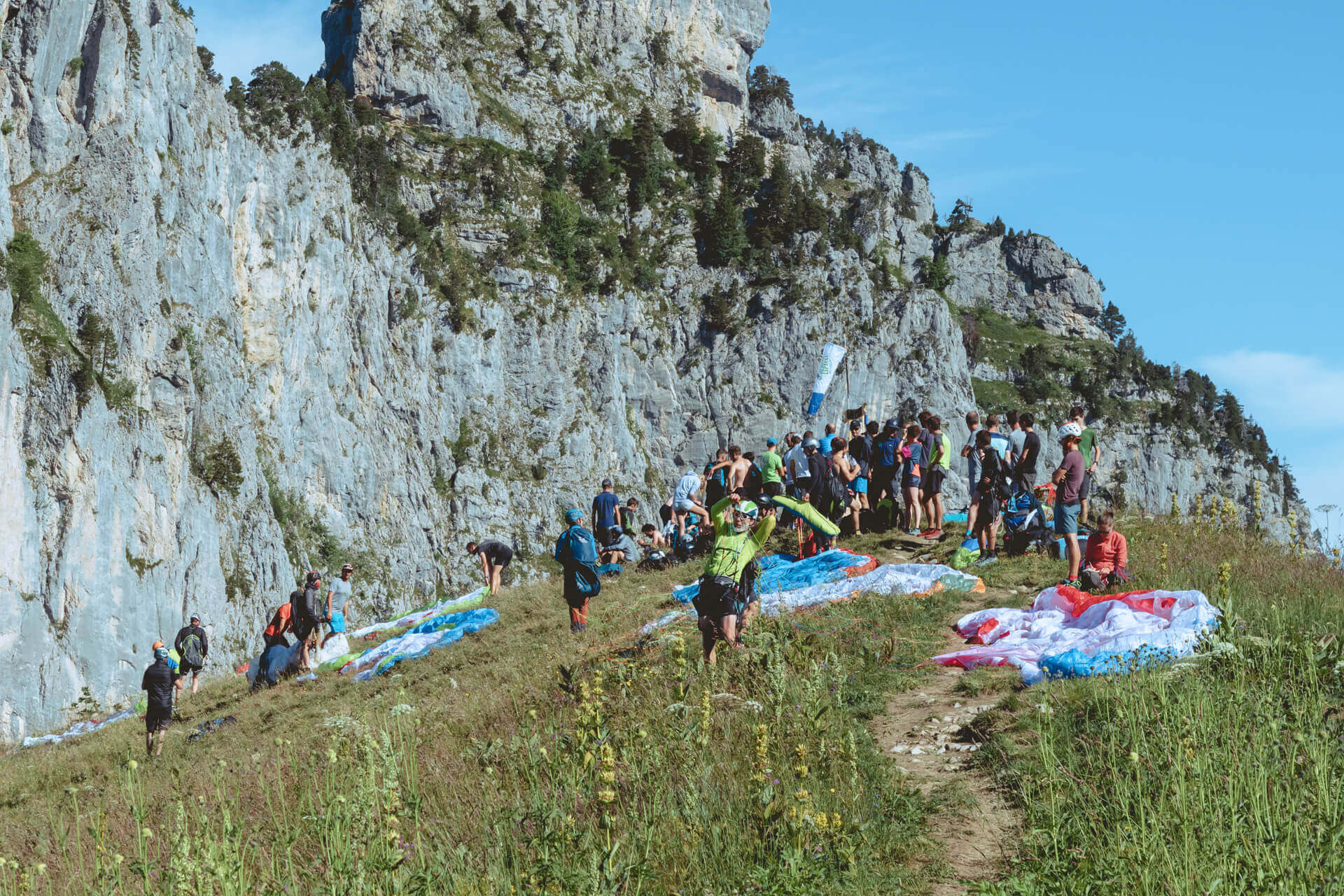
First of all, it's important to remember that in paragliding you take off from the top of a mountain, whereas in skydiving you jump from a plane, or for some, off a cliff as part of base jumping. The equipment is therefore not subject to the same stresses depending on the activity.
Paragliding equipment:
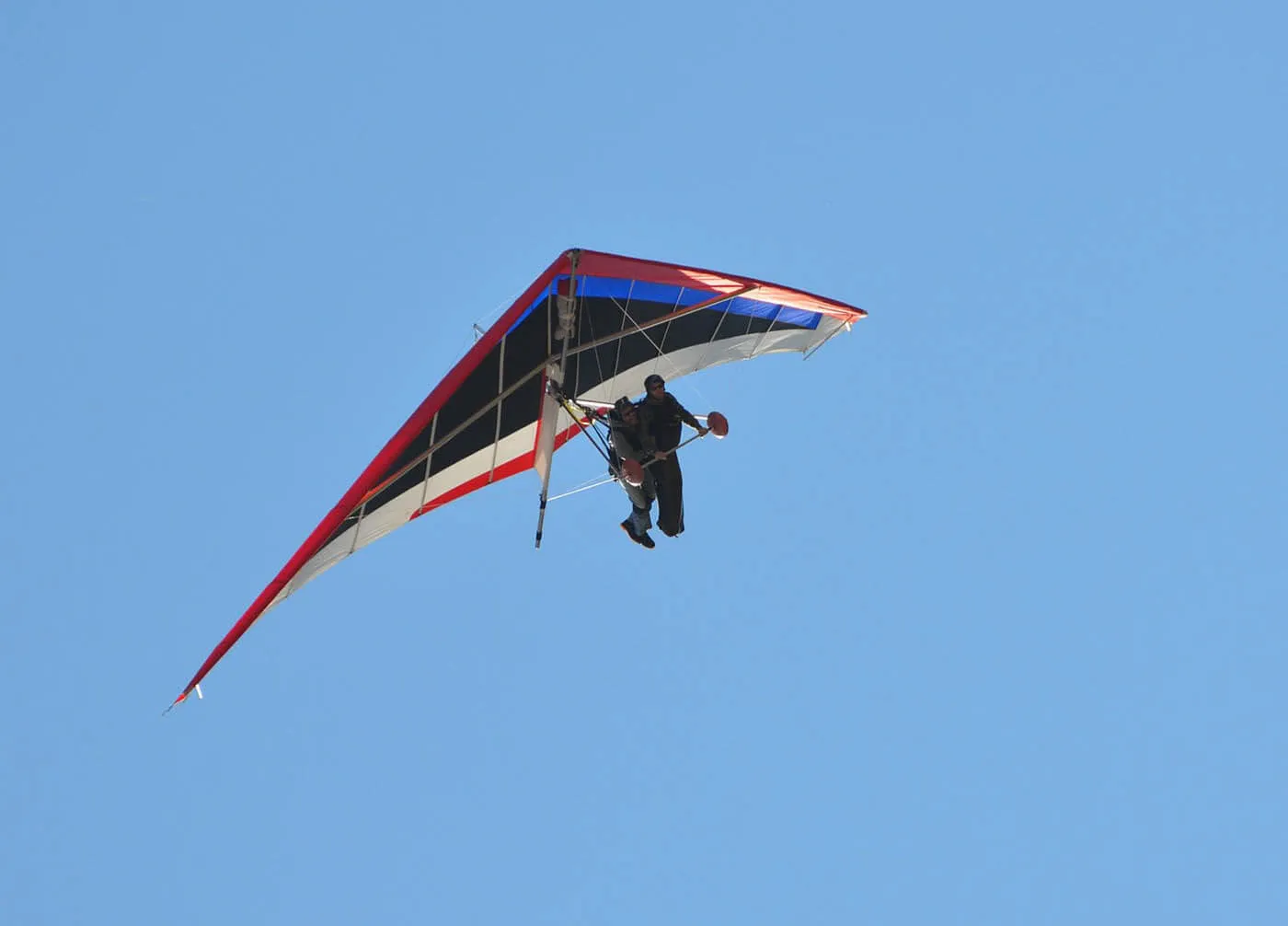
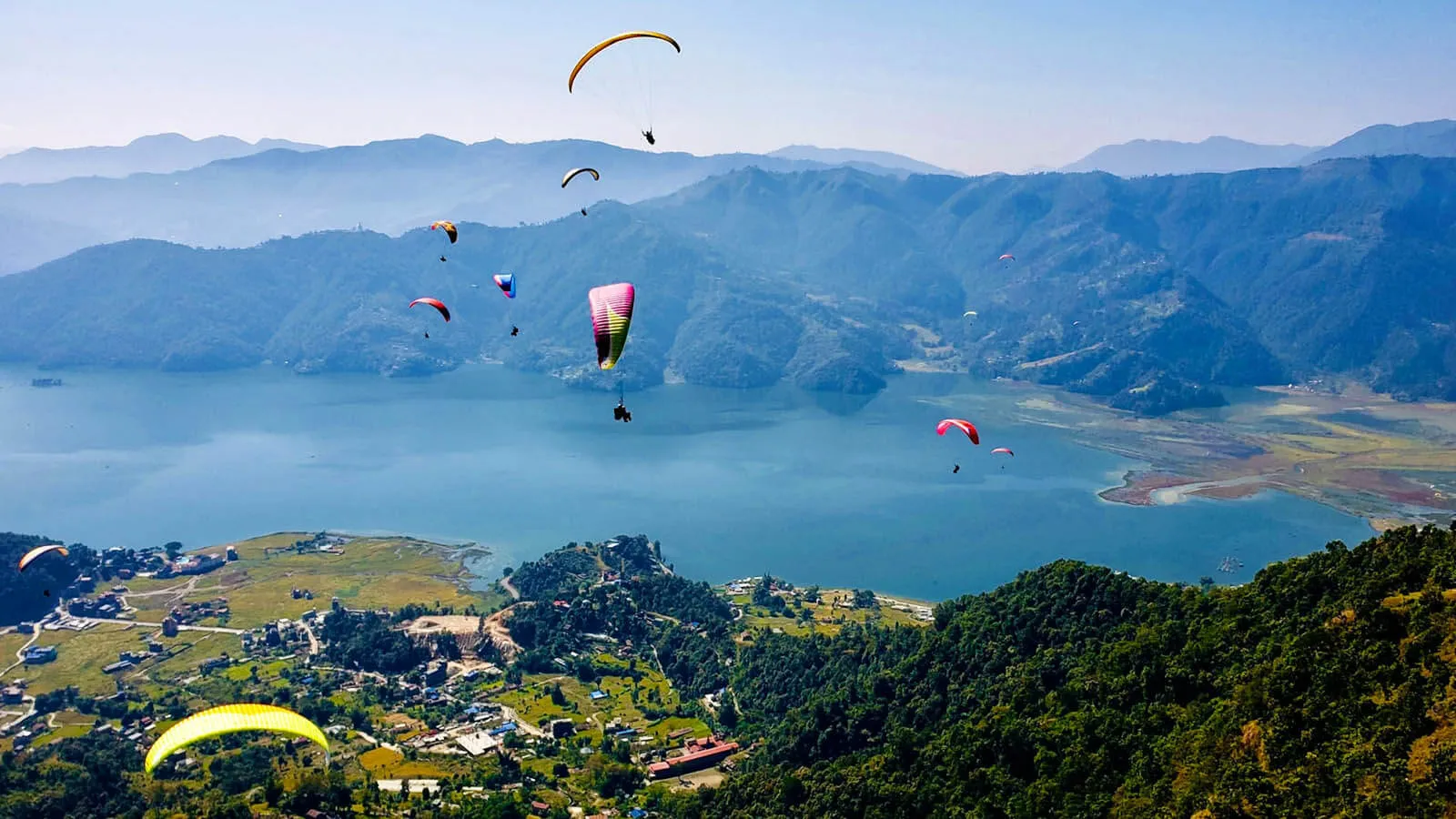
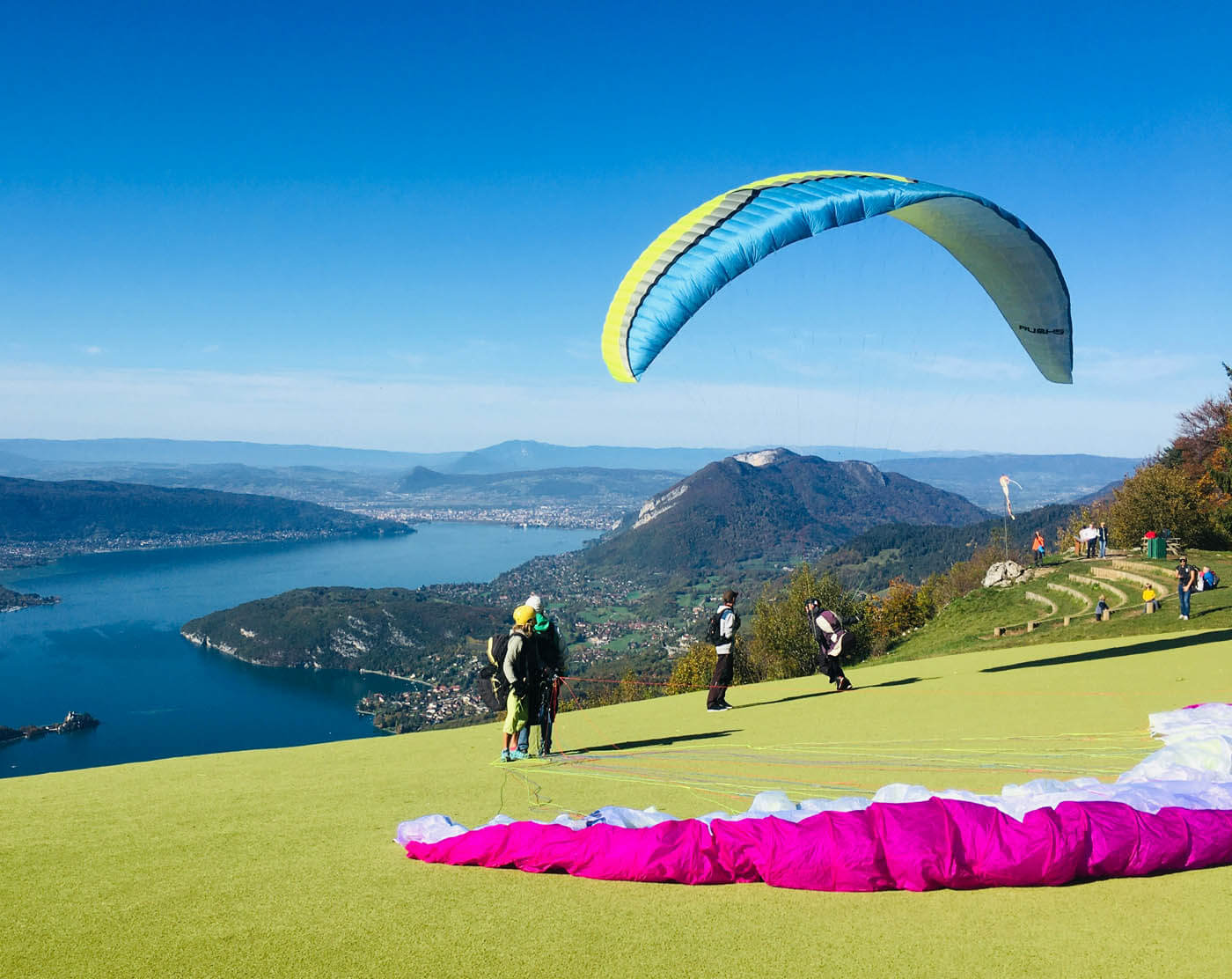
The equipment consists of a wing and a harness connected by many highly resistant lines, and a pair of control handles that let you steer the wing. On top of that is a reserve parachute built into the harness, which can be deployed in case of a problem. As part of a tandem paragliding flight, a second harness is provided at the front for the passenger.Since the goal of paragliding is to glide as well as possible after taking off from a mountain summit, it's important for the wing's surface area and shape to be sufficient and optimized to inflate quickly during the run up, and to glide as well as possible once airborne, like a bird. A tandem paraglider wing typically has a surface area of around 40 m². Less efficient than hang gliders, modern wings now offer quite impressive glide ratios.
Skydiving equipment:
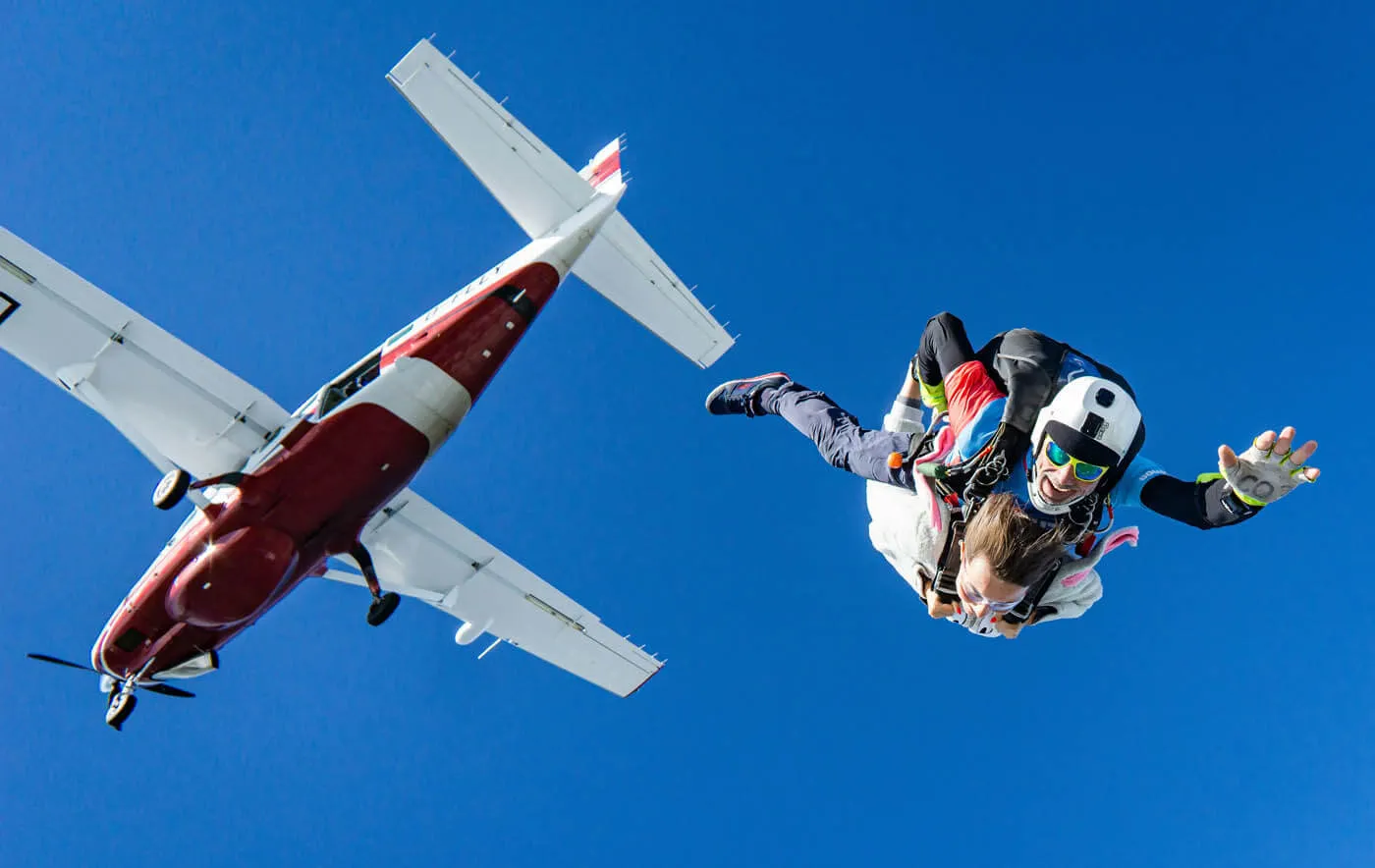
While a tandem parachute canopy is roughly the same size at 40 m², its shape and especially its opening method, and therefore its characteristics, are very different. In skydiving, when you pull the ripcord, a drogue (mini parachute) inflates instantly and pulls the main canopy out of its container. The canopy then opens all at once, generally at a speed close to 200 km/h. The stresses placed on the equipment are therefore very different from paragliding, which inflates gently at only 20-30 km/h. So that the parachute's opening isn't too traumatic for either the equipment or the skydiver, the system includes sliders, a mechanism that helps slow and delay the canopy's deployment. This system limits the shock from 200 km/h down to just a few km/h. But a canopy still opens very quickly: within 2 to 4 seconds.On the safety side, the instructor also carries an additional reserve parachute to cover the rare cases of a problem when the main canopy opens.In terms of comfort, skydiving equipment is also different. While in paragliding you sit comfortably in a harness that resembles a hammock, in skydiving you're held by a much more basic harness that automatically brings you back to an upright position when the parachute opens.
What sensations do these activities offer?
Here too, the difference between paragliding and skydiving is very clear.Skydiving will introduce you to the sensation of freefall. Jumping from high altitude, between 3,000 and 4,000 meters, the skydive lasts about 50 seconds, during which you'll be in near weightlessness at an airspeed of around 200 km/h. When the parachute opens, the energy dissipation is fairly violent but only lasts a very brief moment. After that, you experience a gentler flight under a parachute canopy that closely resembles a paraglider. You then glide through the air and land smoothly after a nice flare.In paragliding, the whole activity happens gently. Takeoff is done by running down the slope, during which you feel pulled upward. You never feel like you're falling, but rather that you're gliding through the air close to the terrain. Tandem paragliding is therefore more geared toward taking it all in. If thermal conditions are favorable, you'll also discover the sensation of coring a thermal bubble like birds do, and gaining height. And indeed, while skydiving only ever goes down, in paragliding you can climb and cover incredible distances. Landing and returning to solid ground happens gently, after a nice flare into the wind performed by the pilot.[caption id="attachment_10965" align="aligncenter" width="1400"]
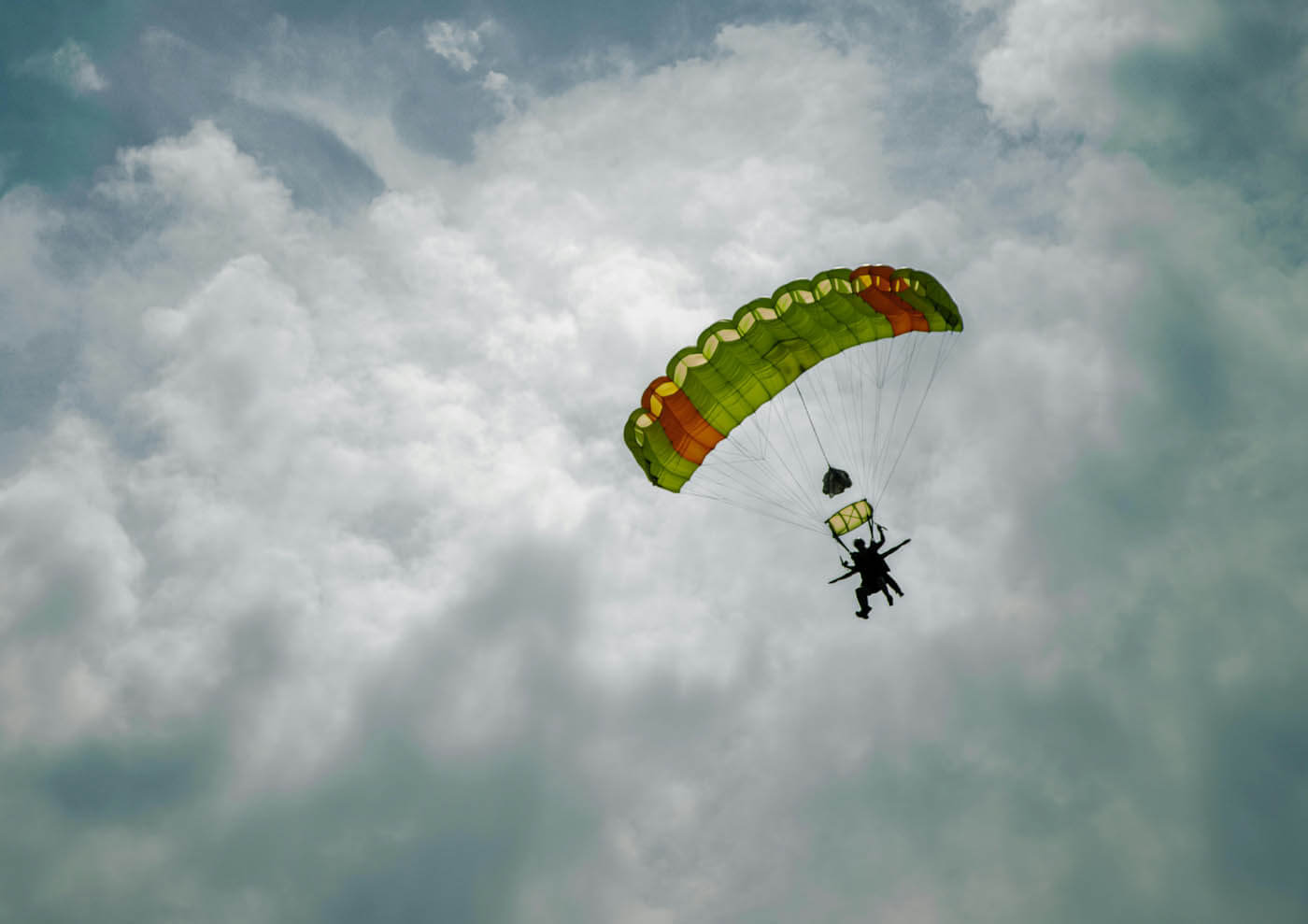
Parachute canopy[/caption]
What budget should you plan for a paragliding flight or a skydive?
On the budget side, here's what to plan for trying each of these sports:
- Price of a tandem paragliding flight: between 100€ and 300€ depending on the package and flight duration (from 15 minutes to 1h45).
- Price of a tandem skydive: between 300€ and 400€ (50 seconds of freefall and 5 minutes of flight under canopy).
On top of that, you can add options like onboard video, flight photos, or even a professionally edited video.[caption id="attachment_10968" align="aligncenter" width="1400"]

Paraglider wing[/caption]
And on the safety side: what are the risks?
Nowadays, both air sports are just as safe as each other. In both cases, the crew carries a reserve parachute in case of trouble in the air, and the equipment has made so much technical progress in recent years that both skydiving and paragliding first flights always go very smoothly. The only question left is whether you'd rather fly like a bird or plunge like a stone.