.svg)
.svg)
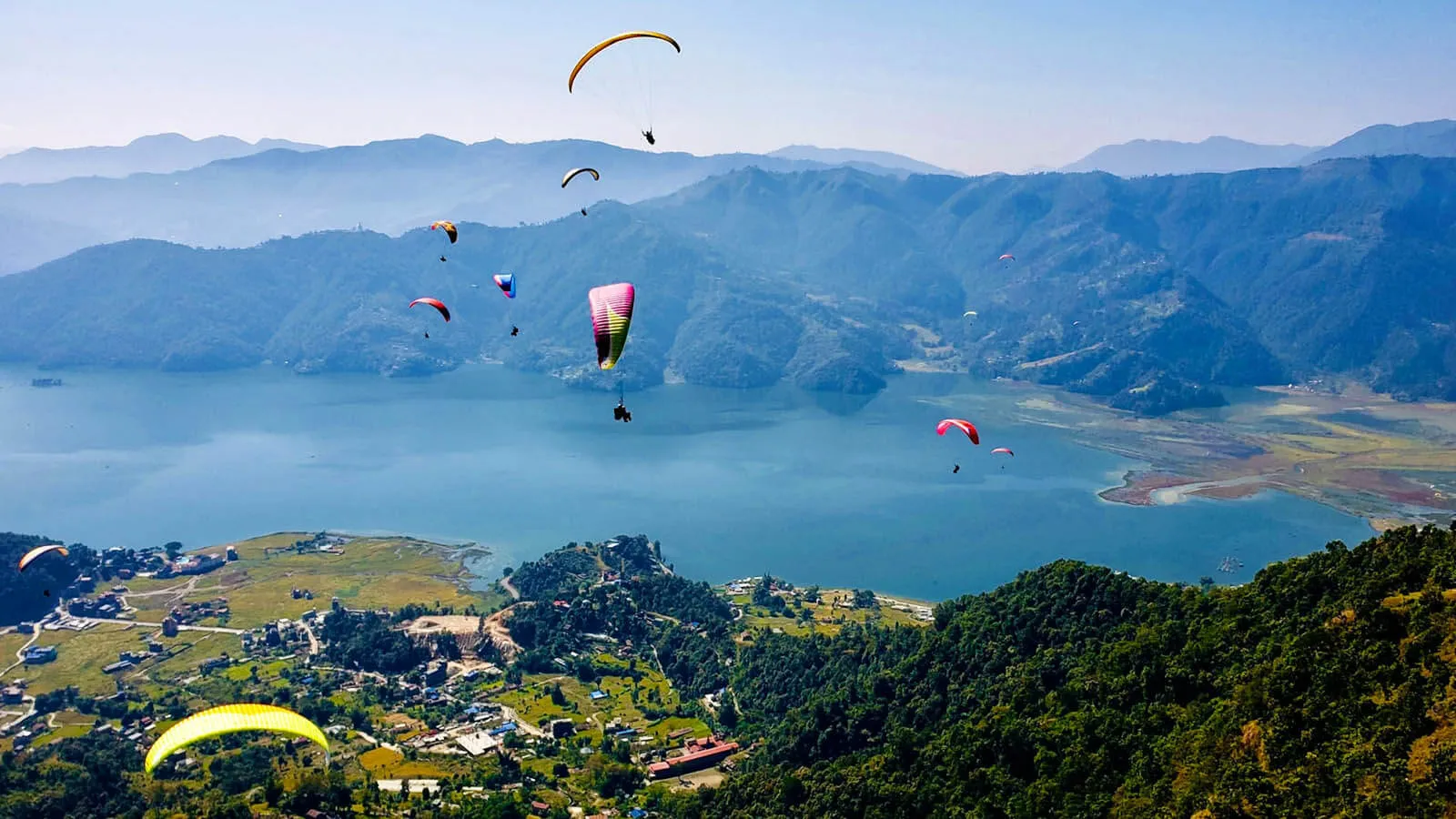
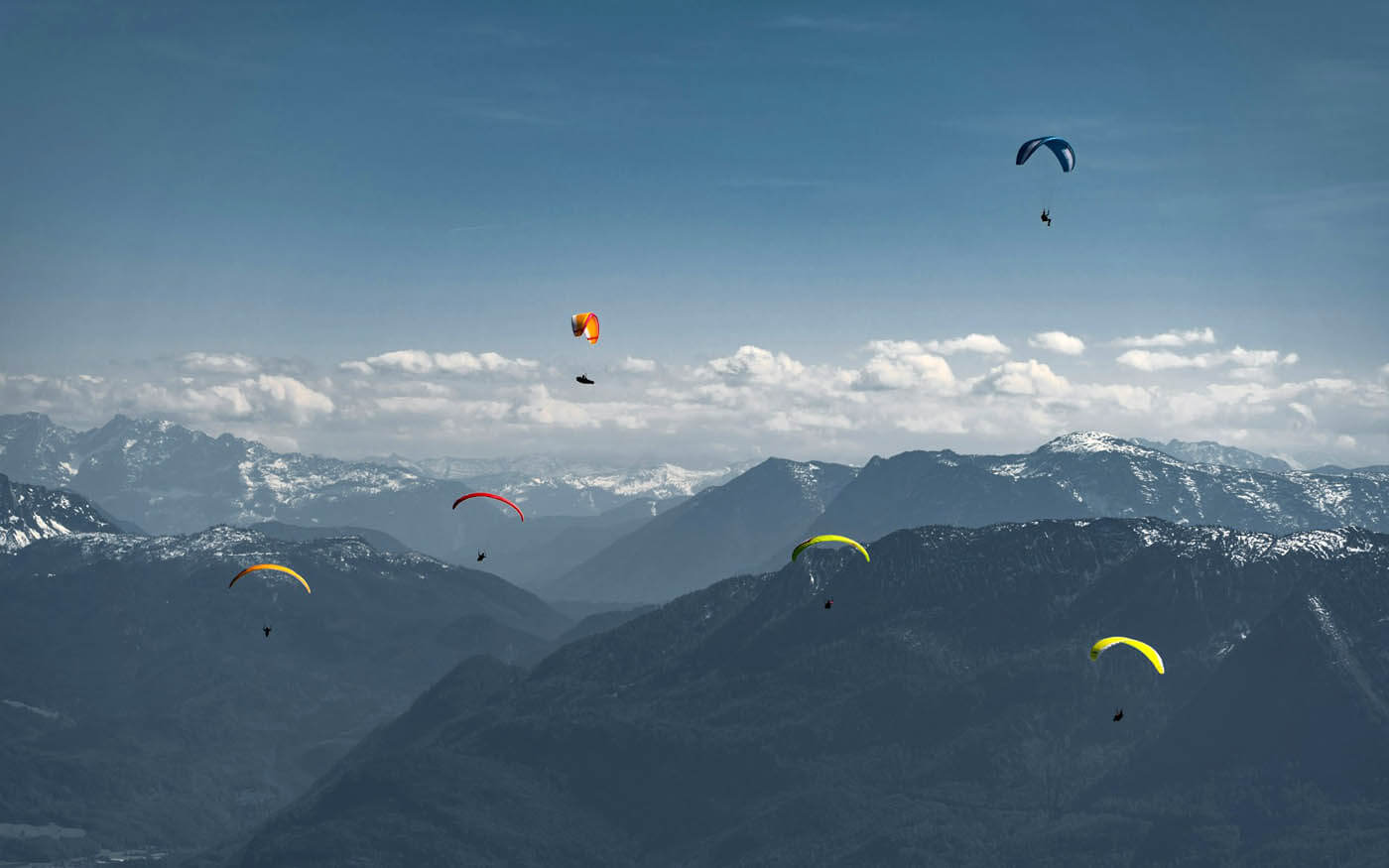
Whether you're doing a tandem flight in Annecy or flying independently, a paraglider always behaves the same way at its core: it moves forward while gently descending. How could it be otherwise, given that a paraglider has no engine at all. And yet, what makes free flying magical is precisely the wing's ability to climb and regain altitude under certain specific aerological conditions. But how is that possible without an engine?
The different techniques for gaining altitude in paragliding
First of all, you need to understand how a paraglider flies. Once airborne, the paraglider wing flies at a fixed speed of about 30 to 35 km/h, or slightly more for tandems, and gradually loses altitude. This loss of altitude is directly tied to the wing's glide ratio, which is tied to its drag through the atmosphere. The more resistance the wing offers to the air, the worse its glide ratio. In stable flight with no input on the controls, a typical paraglider's glide ratio is around 8. This means that for every 8 meters the paraglider moves forward, it loses 1 meter of height. By that logic, if you take off from Planfait with about 400 meters of elevation beneath your feet, you can travel 400 x 8 = 3,200 meters. This is of course a theoretical calculation, since it doesn't account for the day's aerology and thermal conditions. And it's precisely thanks to these two factors that a pilot manages to stay airborne for a long time and gain altitude in paragliding, the way birds do.
Gaining height thanks to thermal bubbles and rising air currents
Making use of thermal bubbles, often called thermal currents, revolutionized paragliding. While at first it was only used to follow the slope down a mountain, thermal flying made it possible to slow the descent and then reverse the trend by regaining altitude.Thermal bubbles form as the sun heats the ground. The more the sun heats it, the more the ground warms up. When the layer right above the ground reaches a temperature significantly higher than the surrounding air, it breaks away and forms a thermal bubble. This bubble, warmer than the surrounding air and therefore less dense, will naturally rise until it reaches an atmospheric layer of the same density. This upper limit is called the ceiling. It varies completely depending on the season, the day, and the time of day. It depends on many factors, such as the angle of the sun's rays relative to the ground (and so the season and time of day), the orientation of the ground relative to the sun's rays (cliffs, for example, heat up very quickly), the air temperature at different altitudes, but also atmospheric pressure, low and high pressure systems. Some days thermal conditions will be generous, with plenty of large diameter bubbles climbing very high, and other days conditions will be unfavorable, with extremely stable air in which it's impossible to climb. You'll need to choose your flying days wisely if you hope to gain altitude in paragliding. Sites like Météo Parapente provide very good forecasts to help plan your flight.
How do you identify a thermal bubble?
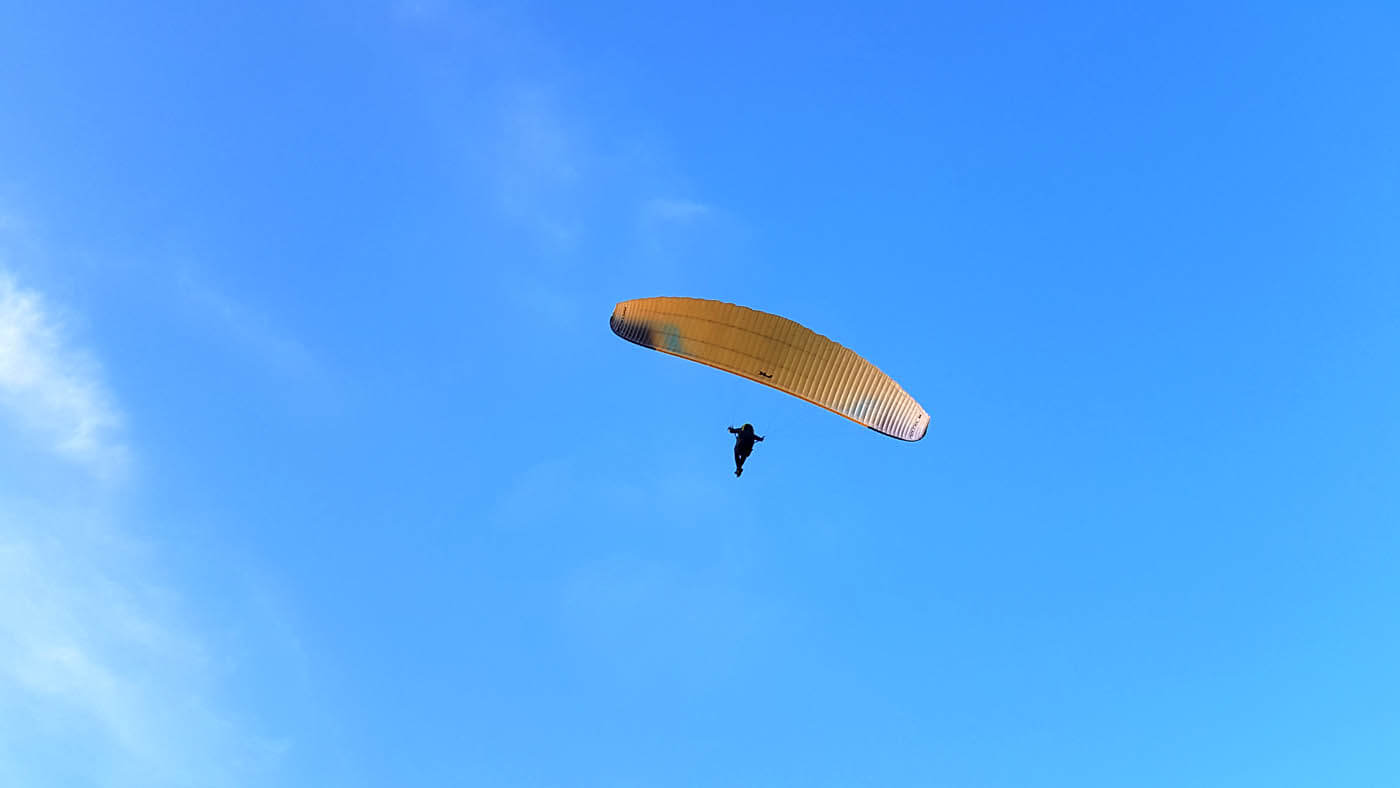
Before you can hope to gain altitude in paragliding, you first need to identify a thermal bubble. In open air, this can be fairly tricky. On good days, thermal bubbles are marked by cumulus clouds at their top, that top also indicating the maximum ceiling reachable. But most of the time these thermal bubbles are invisible. This is known as a blue thermal. To spot them, you then need to rely on observation and feel. A good indicator is watching birds of prey, true masters at this game. When you see a bird circling and gaining altitude, it logically makes sense to head toward that area to do the same. In the absence of any clue, you'll need to rely on your own sensations. When you enter a fairly powerful thermal bubble, you feel pulled upward and can see yourself climbing relative to the surrounding terrain. But in light conditions, it's much trickier. Using a quality variometer then becomes essential.
How do you use it to gain maximum altitude?
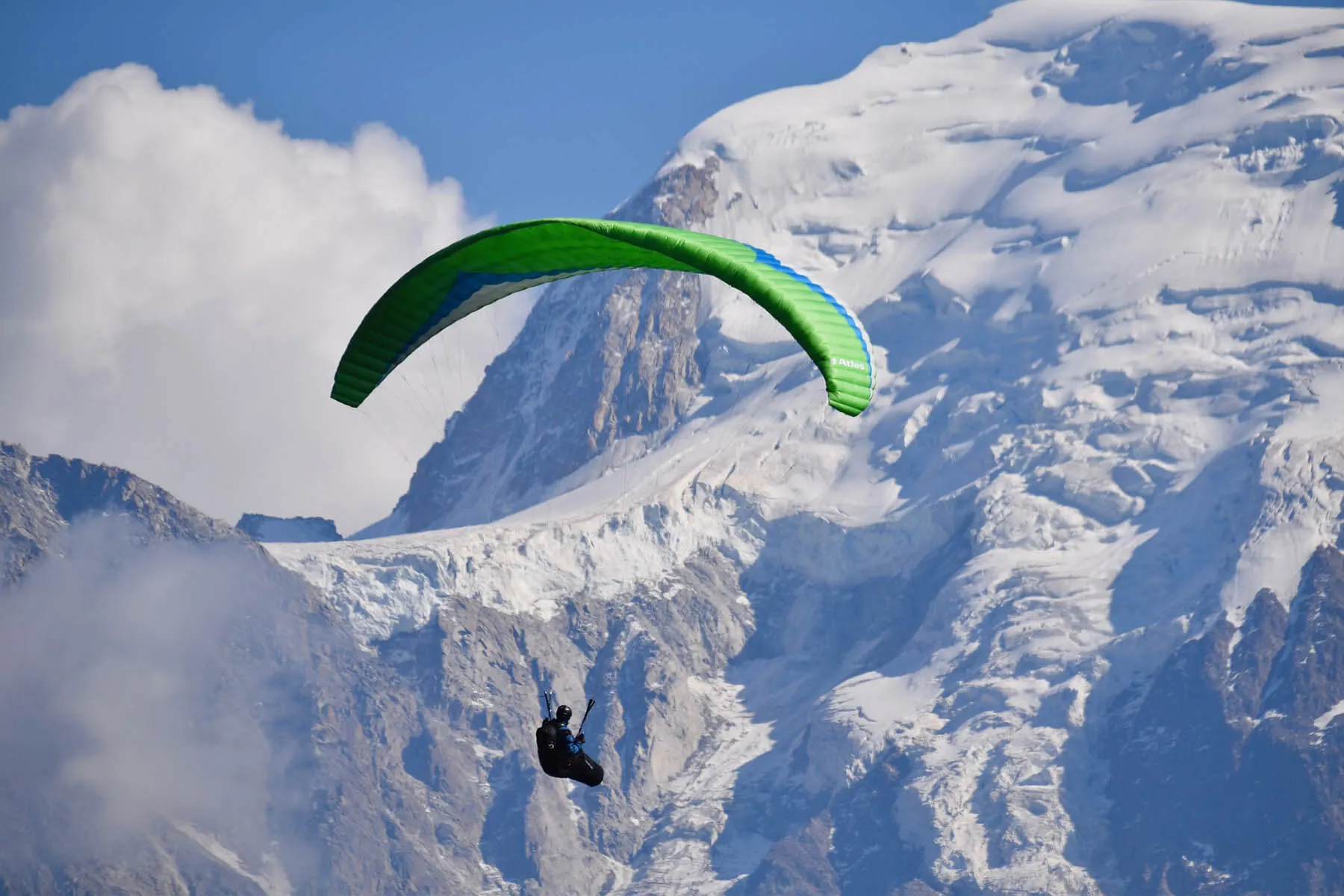
Once you've found the bubble, you need to make use of it, since flying in a straight line will take you out of it very quickly. Just like birds circling in the summer sky, paragliding works the same way. You turn inside the thermal bubble to stay in it as long as possible.The climb rate is then calculated as follows: the thermal bubble's rate of rise relative to the surrounding air, minus the paraglider's rate of descent relative to the surrounding air, i.e. relative to the inside of the thermal bubble. For a thermal bubble rising at 3 m/s, with a paraglider constantly losing 0.5 m/s, you end up climbing at +2.5 m/s.The whole challenge is staying inside the bubble by turning as flat as possible.In the mountains, finding thermals is easier, since slopes and cliffs facing the sun always heat up intensely. You just need to fly along the cliffs or above them to make use of a large rising thermal zone. In the Alps and the Pyrenees, it's often even unnecessary to core along the cliffs. It's better to fly straight legs, going back and forth, to gain altitude in paragliding up to the summit, then core the main thermal and top up before transitioning.Of course, thermal flying requires technique and experience. Don't hesitate to take a thermal course at a school to effectively learn how to use thermals and fly safely in the mountains.
Climbing by making use of dynamic lift along the terrain
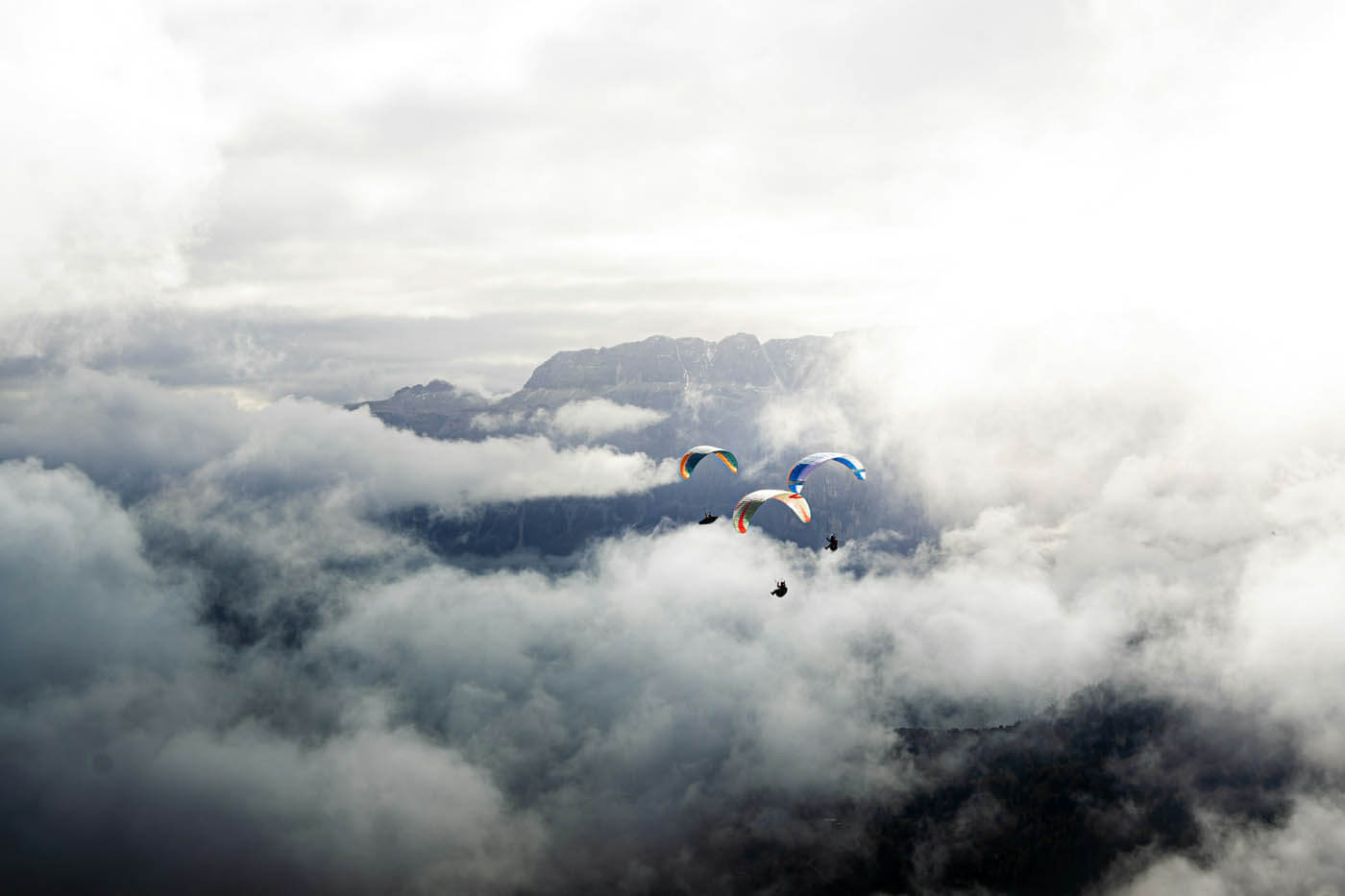
The other method to climb and gain altitude in paragliding is to make use of the wind and the shape of the terrain. You may have noticed that at the Dune du Pyla, for example, it's possible to gain height even though neither the water nor the sand are conducive to forming thermal bubbles. This is actually an aerodynamic principle involving the flow of air over terrain that blocks the flow. This air flow accelerates near the top of the terrain as it climbs the slope. Depending on wind speed, and the shape and height of the terrain, this dynamic lift can be more or less significant. This phenomenon doesn't exist on flat ground but is very useful in the mountains. Often you just need to lean into a well fed windward slope to gradually climb up to the summit. Do still be careful not to fly past the ridge at the top, and to stay on the windward side to avoid ending up in rotor.In addition to dynamic lift caused by the weather wind, you can also make use of slope breezes created on sun facing slopes. These warm air currents flow along and climb the slope up to the summit, where they form thermal bubbles that break away from the mountain to become a real thermal. These slope breezes can oppose the weather wind. You therefore need to be able to properly understand the aerology you're flying in, in order to position yourself well and avoid ending up leeward or in some kind of rotor near the ridge.
How high can you climb in paragliding?
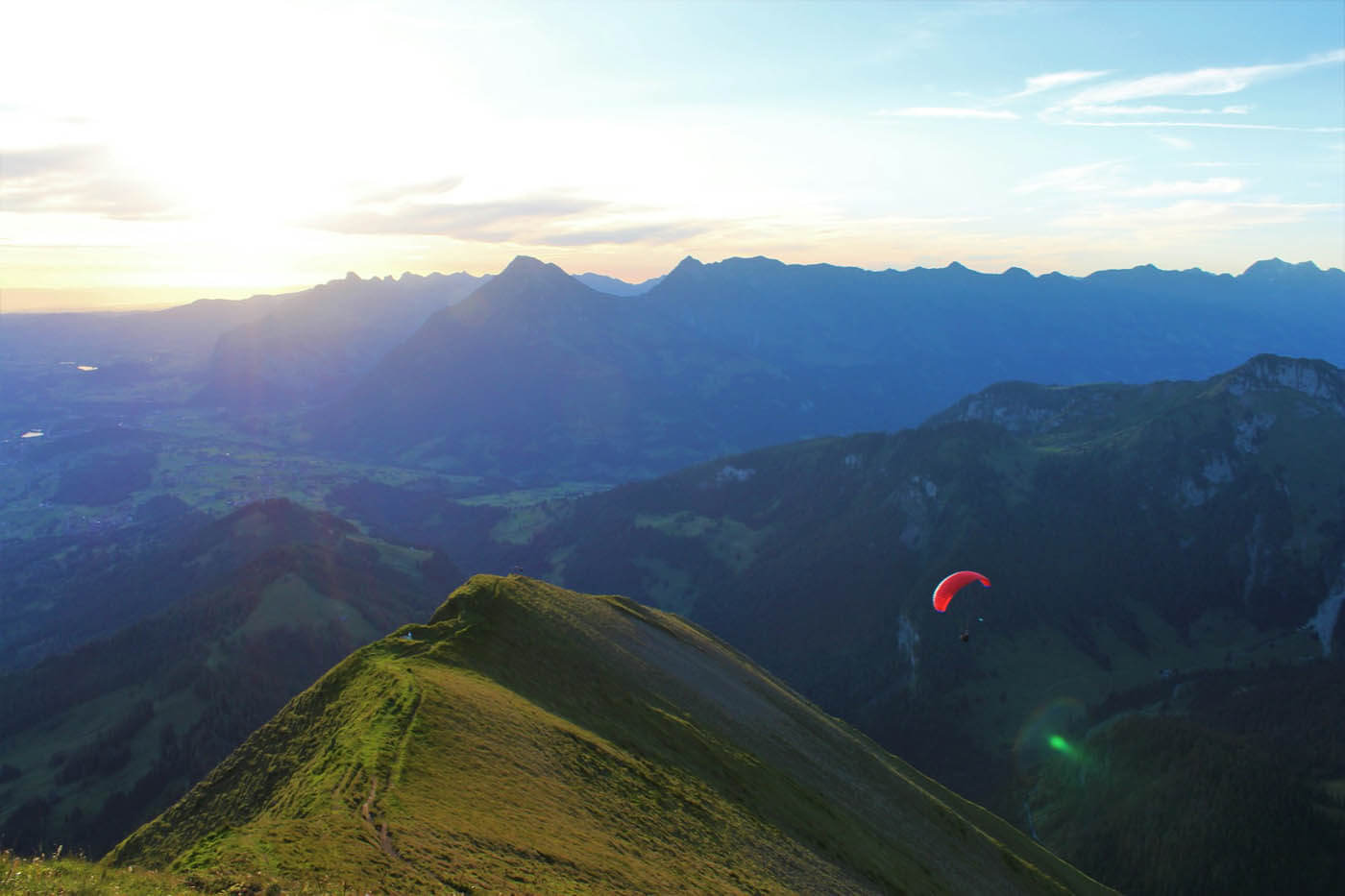
As long as the thermal bubble is rising, the paraglider rises with it. The theoretical limit is therefore the day's ceiling altitude. On certain days of the year, it's possible to fly over Mont Blanc and reach 5,000 meters in France. Do be careful, though, to properly respect the regulations and airspace. As a reminder, in the Alps and Pyrenees it's possible to go above FL 115 (3,450m) provided you stay below 900 m above ground (LTA "E" airspace). In practice, it's therefore possible to climb to an altitude of 5,709 meters directly above Mont Blanc. At that point you're sharing the airspace with commercial IFR flights.The current thermal altitude record is held by Antoine Girard, with 8,407 meters above Broad Peak in the Karakoram.