.svg)
.svg)
Cross-country paragliding: distance, but not only that!
The main reason that drove me to learn paragliding: going from one point to another and back, going beyond a simple glide downward, deciding on your own route and carrying it out, flying cross country. Even with a lot of experience, it still feels magical (at least to me) to be able to use these aerial paths, invisible to the human eye, yet navigable by knowledgeable pilots.
To fly cross country: let's list what we need...
The desire, of course, the driving force for any paragliding pilot, doing it half heartedly would be a bit... Ambitions: to start out in cross country, a reasonable, achievable ambition, to reward yourself with a success. Some very impressive distances are achieved by champions who've taken the cross country discipline to an exceptional level, yet those same pilots will get just as much enjoyment out of a small, unambitious local cross country flight, with friends, or conversely in appreciated solitude.Light aerological conditions let skilled cross country pilots pull off some great rewards.Skills: a good theoretical foundation is essential, understanding breeze patterns (in the mountains), air mass movements, the influence of the weather wind, anticipating them through a good reading of forecasts, but above all through constant observation of how things evolve.Piloting skills let you keep an observation, analysis, strategy, route, and decision oriented mindset.Experience from several small cross country flights lets you combine them into one big flight. Competition experience is a plus for those who know how to draw useful information from it.Another form of experience, and not the least, is that of others: friends' accounts, the websites of the CFD (Coupe Fédérale de Distance), Xcontest, Flymaster, or Syride. These sites let you visualize flights that have been made, and it becomes really interesting to compare what's been done at the same spot and at the same time as your own flight. Very easy to see on Xcontest
For cross country, qualities listed in no particular order:
A first foundation, the right match: wing, pilot, harness (above all, don't rush into a gear arms race). As experience in distance flying grows, once again it'll be necessary not to get carried away and let overconfidence take over.Thermals: knowing how to work a thermal to gain altitude, reading its drift, its changes in rhythm. Once you know how to climb in thermals, you then need to be able to think ahead while climbing, and make plans A, B, C, to be ready to handle the changes imposed by the air mass.Humility: a paragliding pilot on a cross country flight (though this applies to every other type of flight too) needs to politely knock on nature's door and ask permission to pass through. Trying to force your way through would be foolish and dangerous.Choices: depending on weather conditions and ambitions, the choice of a cross country route needs to be made with discernment. But with sufficient skill to manage safety, flying somewhat at random, following the moment's inspiration, can also hold some wonderful surprises.Availability: obviously, on a cross country flight as on any other flight, your mind needs to be free of any commitments in order to go the distance while maintaining the concentration needed for safety. If the ambition is big, you need to plan on spending the whole day at it, and perhaps part of the night hitchhiking back.Adaptability: however good the weather forecasts are, small unforeseen factors often disrupt a well planned cross country flight.The greater the distance, the more time nature has to change its mind and show its sense of humor, or its mood swings.So let's be ready to change our plans and take the cross country flight in another direction, or cut it short for safety, too bad for the distance, there will be other days to fly.Observation: gathering as much information as possible around you lets you be responsive and quick to make decisions. The more a pilot is able to observe far ahead and store information that isn't necessarily useful in the moment, the more they build up a database of explanations for how the air mass evolves.Opportunism: with good observation skills, the maximum amount of stored information lets you anticipate surprises and jump on a good opportunity when it comes within reach.There would certainly still be a lot to say, don't hesitate to contact us with any other questions ;)Happy flying,[caption id="attachment_3077" align="alignnone" width="800"]

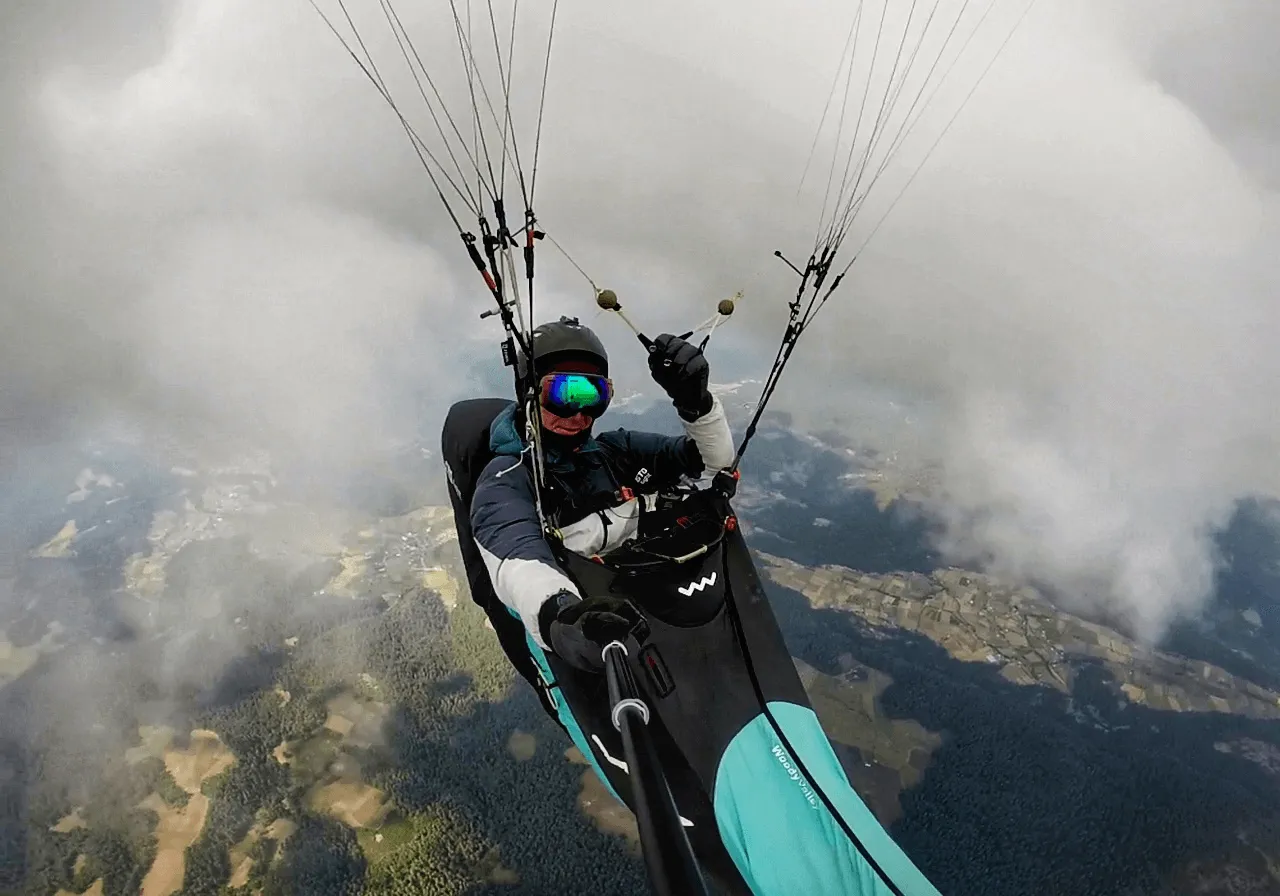
Cross Country Course in the Bauges[/caption]